
Exceptional performance can stem from: (1) doing something others are doing, but doing it better; and (2) doing something different. Do hedge funds that have innovative strategies (do something different) systematically outperform? In their August 2008 paper entitled “Strategy Distinctiveness and Hedge Fund Performance”, Ashley Wang and Lu Zheng construct a “Hedge Fund Strategy Distinctiveness Index” (SDI) and test the predictive power of this index for future hedge fund returns. Specifically, they define SDI as [1 – R-squared] from a two-year regression of the returns for an individual hedge fund against the average returns of funds with the same investing style. This index represents the percentage of variation in a fund’s returns not explained by the variation of its peer’s returns. Using monthly return data for 2767 live and dead hedge funds over the period January 1994 through June 2007, they conclude that:
- SDI ranges from 6% to 100% across the entire sample of hedge funds, with a mean of 68% and a standard deviation of 25%. More than a quarter of the funds have an SDI over 90% (highly distinctive).
- Individual fund SDI strongly persists up to five years.
- High SDI indicates future outperformance. A portfolio consisting of the 20% of hedge funds with the highest (lowest) SDIs over the prior two years, rebalanced quarterly, yields an average annualized risk adjusted return of 10.2% (3.6%).
- SDI increases with past performance and incentive fees. SDI decreases with past idiosyncratic return volatility, fund age and fund size.
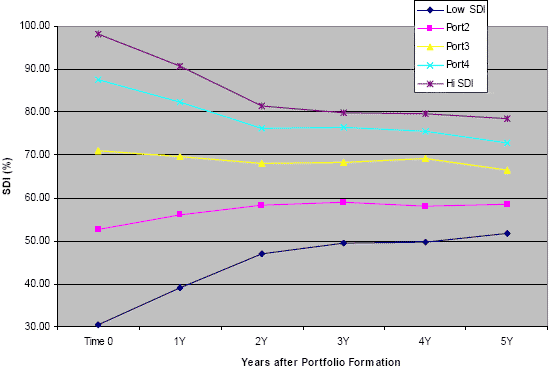
The following chart, taken from the paper, tracks the five-year persistence of the average SDI for portfolios of hedge funds formed quarterly based on past fund SDI across the entire 1996-2007 sample period. The chart shows that differences in average SDI, arguably related to hedge fund innovativeness, diminish considerably over the two years after portfolio formation but persist for at least five years.
In summary, hedge fund investors are probably better off with maverick funds, perhaps new ones every couple of years, than with those cut from the herd.